Load shedding is simply a fact of life for Gauteng homeowners — but the repeated cycle of power cutting out and surging back on takes a real toll on your home's electrics, even if it's not always obvious until something fails.
Why load shedding is hard on your electrical system
Every time the power returns after an outage, there's a brief surge as the grid stabilises and appliances draw current again. On their own, these surges are usually small. Repeated day after day, though, they add cumulative stress to sensitive electronics, appliance motors and ageing wiring — which is why faults so often seem to appear "out of nowhere" after months of load shedding, when really they've been building up for a while.
Protect your home with surge protection
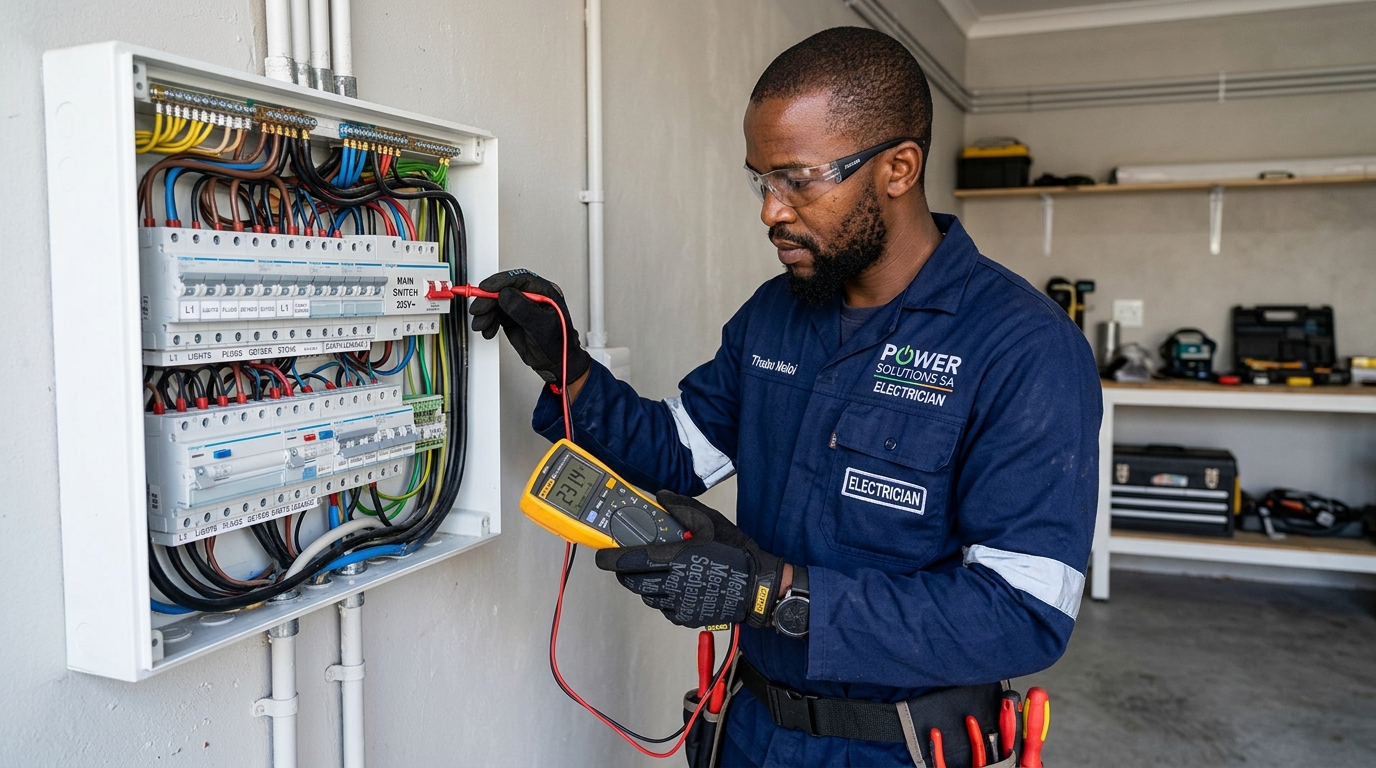
A surge protection device installed at your distribution board is one of the most effective, lowest-effort ways to protect everything downstream of it — from your fridge to your router to your gate motor's control board — without having to fit individual plug-in protectors at every socket. If your home doesn't have one fitted at the DB board, it's a sensible addition, and it's the kind of job an electrician can usually complete in a single visit.
Backup power: a few safety basics
Inverters, battery systems and generators all bring their own safety considerations, and they're worth getting right from the start rather than fixing later:
- Backup power should be installed with a proper isolation or changeover switch, so it can never feed back into the grid while municipal power is live — this protects both your household and anyone working on the lines outside.
- Generators need adequate ventilation and should never run in an enclosed garage or room, because of carbon monoxide risk.
- Any backup power installation should be done, or at minimum signed off, by a qualified electrician — this isn't an area for a DIY shortcut.
What to check after a long outage
After an extended outage, it's worth a quick walk-through of your property:
- Distribution board — check whether any breakers have tripped and won't reset, which can point to a fault rather than a simple overload.
- Geyser — an element that's failed silently sometimes only becomes obvious after the next outage, when you discover there's no hot water.
- Gate motors and alarms — both rely on backup batteries that degrade over time; if a gate is slow to respond or an alarm needs constant resetting after outages, the battery is a common culprit.
Recurring electrical faults after load shedding? Call Motsei Group on 076 378 2637 — we handle electrical fault-finding, surge protection and DB board work across Gauteng.
When to call an electrician
A breaker that trips once might be a one-off. A breaker that trips repeatedly, an outlet that's warm to the touch, or appliances failing in clusters after outages are all worth having looked at properly, rather than simply resetting and hoping. It's a much smaller job to fix a developing fault than to deal with the aftermath of one.